Every new dog owner faces the same problem. The pet shop has an overwhelming amount of stuff and it is not always obvious what you actually need versus what is just nice to have. This guide covers the essential equipment for new dog owners, organised by category, with honest notes on what to buy and what to skip. Where Bristol-local options exist, they are included.
What to buy before your dog comes home
A well-fitted harness
A harness is the single most important piece of walking kit you will buy. Unlike a collar, a harness distributes pressure across the chest rather than the neck. This matters for everyday walking and is especially important for dogs who pull.
Fit is everything. A harness that rides into the armpits or slips over the head is uncomfortable and potentially harmful. If you are in Bristol, Eat Play Love on West Street in Bedminster offers in-person harness fittings and will make sure the fit is right before you leave. Far better than guessing online.
Good for: all dogs, but essential for pullers and puppies still learning to walk on a lead.
A 5 metre long line training lead
Most new owners buy a short lead and a retractable. Skip the retractable. They teach dogs to pull, the locking mechanism fails at the wrong moment, and they give you very little control.
A 5 metre long line is far more useful. It gives your dog room to sniff and explore while keeping you in control, and it is the best tool available for recall training. Buy one before your first off-lead walk.
Good for: recall training, young dogs, and anywhere you are not ready to go fully off-lead.
Poo bags
Non-negotiable and easy to forget. Keep a roll in every coat pocket. Biodegradable options are widely available. Running out mid-walk on Ashton Court is not a situation anyone wants.
A hands-free lead or waist belt
Once your dog walks reasonably well, a hands-free lead makes longer outings significantly more comfortable. Useful for navigating busy areas and good for running with your dog once they are old enough.
Good for: confident walkers, longer routes, owners who run.
Setting up your home for a new dog
A crate
Used properly, a crate is one of the kindest things you can give a new dog. It provides a space that is entirely theirs, which helps with settling in and with toilet training. Introduce it slowly with treats and never use it as punishment.
Good for: puppies, rescue dogs adjusting to a new home, and any dog who benefits from having their own defined space.
A good quality dog bed
Dogs sleep for up to 16 hours a day. A bed that holds its shape, washes easily, and provides proper support will last years. Avoid cheap foam options that compress quickly. Memory foam is worth the extra cost for larger breeds or older dogs with joint issues.
Stainless steel food and water bowls
Plastic bowls scratch easily, harbour bacteria, and some dogs develop skin reactions to prolonged contact with them. Stainless steel bowls are easy to clean and last indefinitely. If your dog eats too fast, a slow feeder bowl is worth considering alongside.
Stair gates
Useful in the first few weeks while you work out which rooms you want your dog to have access to. Much easier than constantly managing doors, and important if you have a puppy you are keeping off furniture or out of certain areas.
Toys appropriate for your dog's size
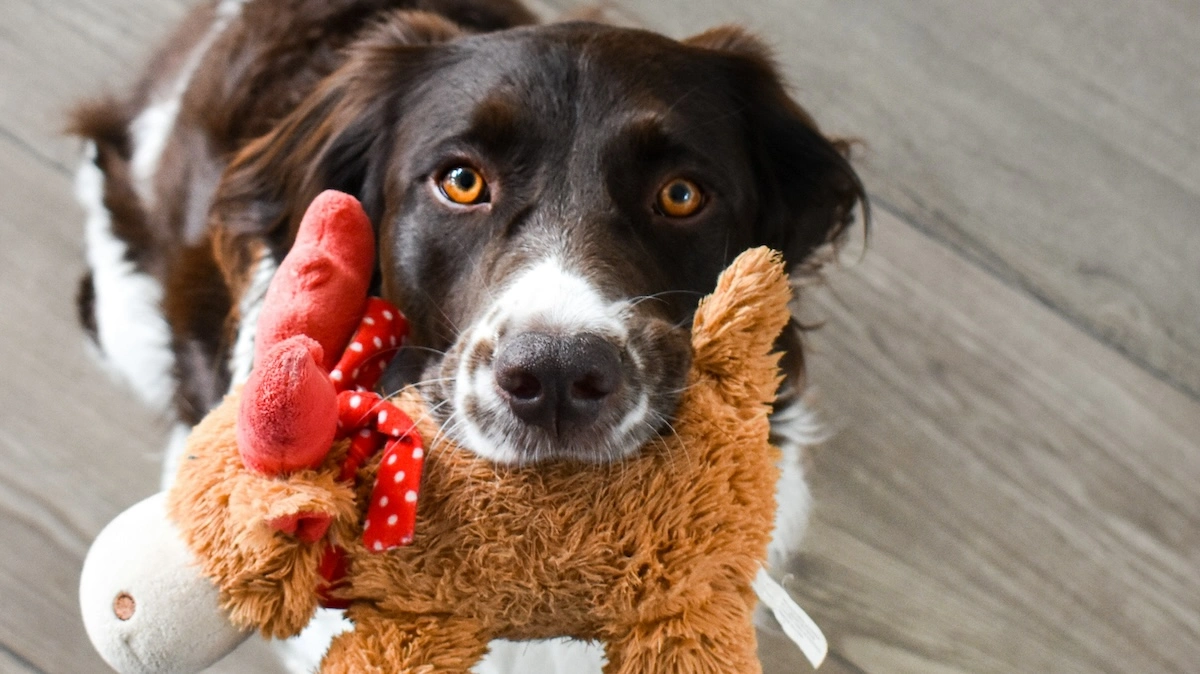
Size matters more than most new owners realise. A toy too small for your dog is a choking hazard; one too large is frustrating and goes ignored. Buy a small selection to start, such as a ball, something to chew, and something to tug, and pay attention to what your dog actually plays with before buying more.
Good for: all dogs, but check size guidelines on packaging and supervise until you know how your dog plays with each toy.
A dog blanket
Separate from the bed, a blanket gives your dog something familiar that smells of home. Useful in the crate during the settling-in period, good for the car, and handy for any dog who likes to nest. Fleece washes well and dries quickly.
Enrichment toys for mental stimulation
A tired dog is not just a physically tired dog. Mental stimulation matters as much as exercise, particularly for working breeds and high-energy dogs. Puzzle feeders, snuffle mats, and Kongs stuffed with food give your dog something to work at and can make a real difference to behaviour at home.
Start simple. A Kong filled with kibble and frozen overnight is one of the most effective and inexpensive enrichment tools available.
Good for: all dogs, but particularly important for breeds with high working drive, dogs left alone for periods, and puppies who are not yet fully vaccinated and cannot go out for walks.
Training kit that actually gets used
A treat pouch
Training without easy access to rewards is frustrating. A treat pouch clips to your waistband and keeps treats within reach during walks and sessions. Most have a magnetic closure so you can get a treat out quickly. Buy one before you start any training.
High value training treats
Your dog's regular kibble will not cut it for training. You need something genuinely exciting: small pieces of cooked chicken, cheese, or a commercial treat they respond to strongly. Keep pieces small so you are not overfeeding across a session.
A clicker
Clicker training is one of the most well-evidenced methods available. The click marks the exact moment your dog does the right thing, which is more precise than a verbal cue alone. Inexpensive to buy and straightforward to use. If you are doing any formal training, start with a clicker from day one.
Keeping your dog safe and healthy
An ID tag
A legal requirement in the UK. Your dog must wear a tag displaying your name and address in any public place. Get one made before your dog comes home. Most pet shops will engrave one while you wait.
A basic pet first aid kit
A kit with wound dressings, saline solution, and a tick remover is worth having at home. Dogs find things on walks they should not, and having basic supplies to hand buys you time before you can get to a vet. The Dogs Trust publishes a free guide on what to include.
Pet insurance
The most important item on this list. Vet bills are significant and a single out-of-hours emergency can run to several thousand pounds. Get lifetime cover sorted before your dog comes home. Annual policies are cheaper upfront but can exclude conditions after the first year, which matters if your dog develops anything long-term.
Bristol dog shops worth visiting
If you are based in Bristol and want to buy in person rather than online, these are the local shops worth knowing about.
Eat Play Love, Bedminster Independent dog shop on West Street with a thoughtfully chosen range of food, treats, accessories, and expert in-person harness fittings.
DOGHOUSE, Clifton A luxury dog shop and award-winning grooming salon on Portland Street in Clifton Village, stocking premium accessories and its own product line.
Five Acre Farm Shop, Southville One of the most dog-welcoming shops in Bristol, inside the Tobacco Factory. Good for natural treats and smaller accessories.
Frequently asked questions: equipment for new dog owners
What equipment do I need before bringing a dog home? At minimum: a harness, a lead, food and water bowls, a bed or crate, poo bags, an ID tag, and pet insurance sorted. Everything else can follow once your dog is settled.
Is a harness better than a collar for a new dog? For walking, yes. A harness distributes pressure more evenly and gives you better control. A collar is still useful for attaching ID tags, but most trainers recommend walking on a harness rather than a collar, particularly with puppies or dogs who pull.
What is the best lead for a new dog owner? A standard fixed-length lead of around 1.2 to 2 metres for everyday walking, plus a 5 metre long line for training and open spaces. Avoid retractable leads, which can reinforce pulling and are difficult to control in unpredictable situations.
Do new dog owners need a crate? Not essential, but highly recommended. A crate gives your dog a safe, defined space and makes toilet training significantly easier. Introduced properly, most dogs choose to use their crate voluntarily.
How much does it cost to equip a new dog? Budget roughly £150 to £300 for the core kit: harness, leads, bowls, bed, crate, and training supplies. Pet insurance is on top of this and varies by breed, age, and level of cover.
Think we missed something essential? Email us at woof@thebristolhound.com
Want a weekly roundup of the best Bristol dog content? Sign up to The Bristol Hound newsletter below.